St. Elizabeth
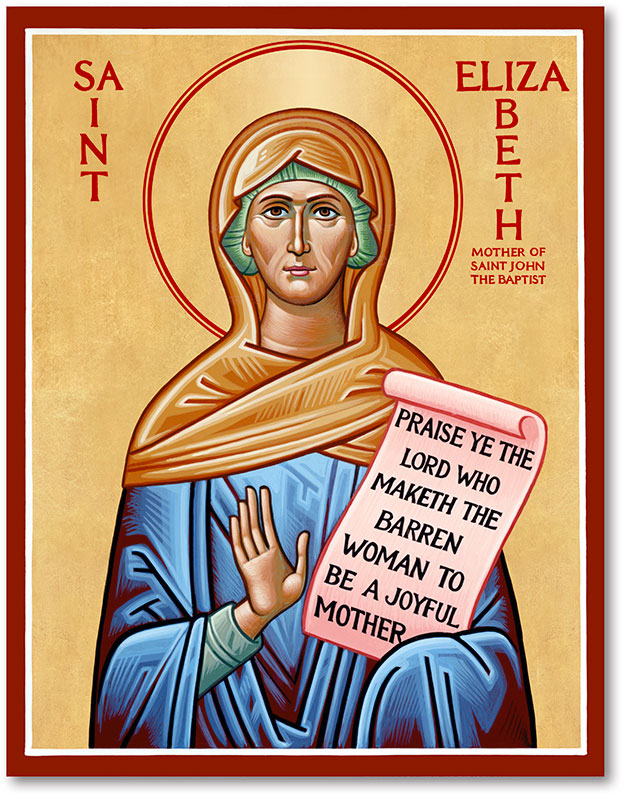
| Feast Day | November 5 |
|---|---|
| Patronage |
|
| Place of Birth | N/A |
| Place of Death | N/A |
| Canonization Date | N/A |
Biography
St. Elizabeth is known in the Christian tradition as the **mother of John the Baptist and the wife of Zechariah, a priest. Her story is told primarily in the Gospel of Luke, where she is described as a descendant of Aaron and a righteous woman who, with her husband, lived a devout life.
Elizabeth and Zechariah were both advanced in age and had no children, which caused Elizabeth great distress, as childlessness in that time was often seen as a disgrace. However, according to the Gospel of Luke, the Angel Gabriel appeared to Zechariah in the Temple and announced that Elizabeth would conceive a son, who would be John—the one who would prepare the way for the coming of Jesus Christ. Elizabeth miraculously conceived in her old age, and she bore a son, who would grow up to become John the Baptist, the forerunner of Christ.
Elizabeth’s pregnancy was marked by an important moment when Mary, pregnant with Jesus, visited her. Upon their meeting, Elizabeth’s unborn child, John, leapt in her womb, and she spoke words of blessing over Mary, recognizing the divine nature of her child. This event is seen as a powerful sign of John’s future mission and a declaration of Mary’s special role in God’s plan of salvation.
St. Elizabeth is venerated as a model of faith, patience, and trust in God’s promises. While there is little recorded about her life after the birth of John, her role in the life of Christ and as the mother of the greatest prophet, John the Baptist, makes her a significant figure in Christian tradition.
Miracles & Important Events
- The Annunciation to Zechariah: The miracle of Elizabeth’s conception, announced by the Angel Gabriel to her husband Zechariah, is a significant event. This pregnancy was considered miraculous because of their advanced age and long-standing barrenness.
- The Visitation: Another important event was the Visitation, where Elizabeth, filled with the Holy Spirit, recognized the Blessed Virgin Mary as the Mother of God and prophetically declared the greatness of her child. This moment is celebrated in the Gospel of Luke and commemorates the bond between Mary and Elizabeth, as well as the joyful recognition of their divine pregnancies.
- John the Baptist’s Leaping in the Womb: When Mary visited Elizabeth, John the Baptist leaped in his mother’s womb upon encountering the presence of Jesus, who was also still in the womb of Mary. This event is considered a miraculous recognition of the unborn Savior and a sign of the prophet’s role in preparing the way for Jesus.
Associated Symbols
- The Infant John the Baptist: Often depicted with her son, John the Baptist, symbolizing her motherhood and role in the divine plan.
- Pregnancy or Expectant Motherhood: As the mother of John the Baptist, St. Elizabeth is commonly associated with symbols representing motherhood and the joy of pregnancy.
- The Visitation: St. Elizabeth is often depicted in scenes from the Visitation, the moment when Mary, pregnant with Jesus, visited her. In these scenes, Elizabeth often stands alongside or in the company of the Virgin Mary.
Quotes & Writings
- “Blessed are you among women, and blessed is the fruit of your womb!” (Luke 1:42) — This is Elizabeth’s greeting to Mary, which has been incorporated into the Hail Mary prayer, which is central to Catholic devotion.
- “And why is this granted to me, that the mother of my Lord should come to me?” (Luke 1:43) — Elizabeth’s recognition of the divinity of Jesus Christ within Mary is seen as a moment of profound spiritual insight.