St. George
| Feast Day | April 23 |
|---|---|
| Patronage |
|
| Place of Birth | Cappadocia (modern-day Turkey) |
| Place of Death | Lydda (modern-day Israel/Palestine) |
| Canonization Date | N/A |
Biography
Saint George was a Roman soldier and Christian martyr who became one of the most venerated saints in Christianity. He was born to Christian parents in Cappadocia and later served in the Roman army under Emperor Diocletian. When the emperor began persecuting Christians, George refused to renounce his faith, leading to his torture and execution around 303 AD.
His courage and devotion made him a legendary figure, and he became a patron of knights, soldiers, and many nations, including England, Georgia, and Catalonia.
The Legend of Saint George and the Dragon
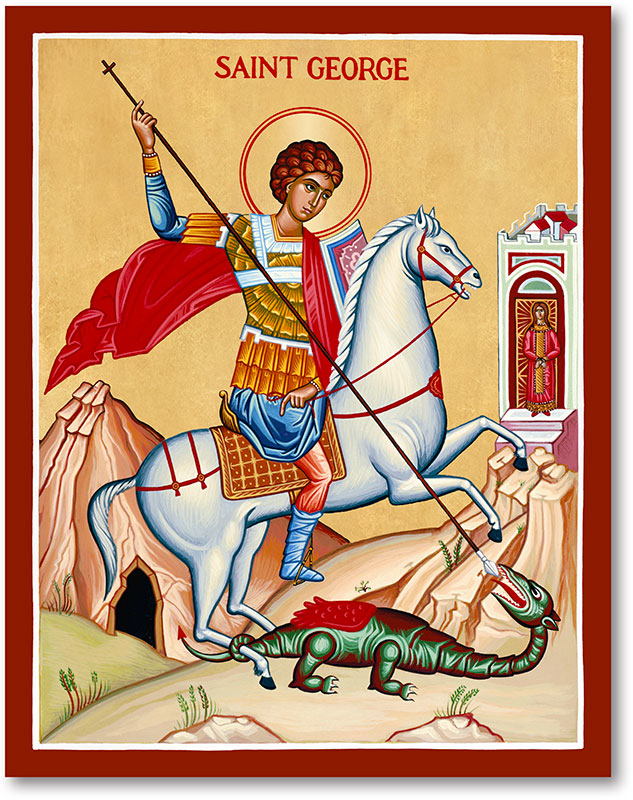
The famous legend of Saint George and the Dragon emerged in the Middle Ages. According to the story:
- A terrible dragon was terrorizing a city (often identified as Silene in Libya).
- The townspeople, in fear, gave the dragon sheep and eventually human sacrifices to appease it.
- When the king’s daughter was chosen as the next sacrifice, Saint George arrived on horseback, armed with a spear.
- He slayed the dragon after making the sign of the cross and rescued the princess.
- The grateful townspeople converted to Christianity in response.
Though largely a symbolic tale, it represents the triumph of good over evil and faith over fear.
Miracles & Important Events
- Refused to worship Roman gods and suffered martyrdom for his Christian faith.
- Dragon-slaying legend, symbolizing the victory of Christianity over paganism.
- Many miracles attributed to him, especially in battle, where soldiers invoked his name for protection.
Associated Symbols
- Red Cross on a white background (St. George’s Cross, symbol of England)
- Dragon and spear/sword (his victory over evil)
- White horse (symbol of purity and divine aid)
- Armor and shield (symbolizing faith and courage)