St. Athanasius of Alexandria
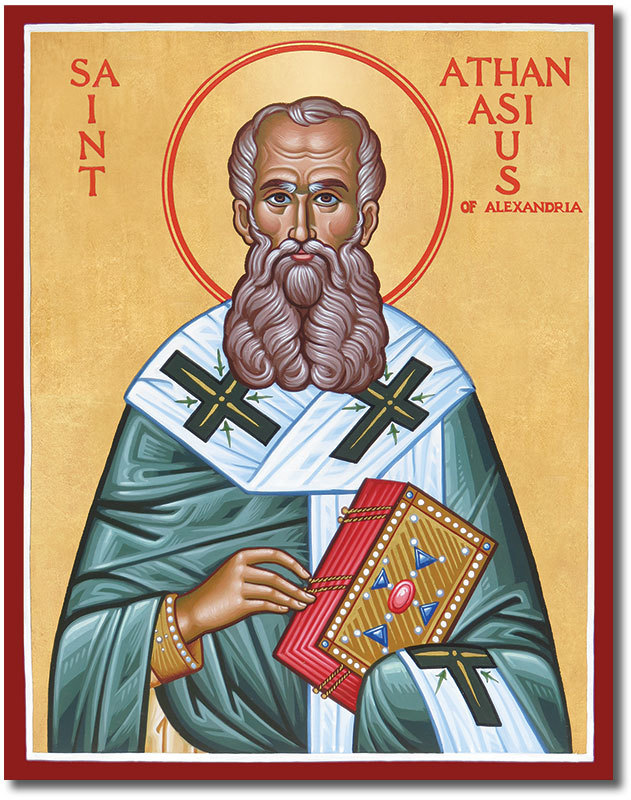
| Feast Day | May 2 |
|---|---|
| Patronage |
|
| Place of Birth | Alexandria, Egypt |
| Place of Death | Alexandria, Egypt |
| Canonization Date | N/A |
Biography
St. Athanasius was one of the most important theologians and bishops in the early Christian Church, especially known for his staunch defense of the Nicene Creed and his opposition to Arianism, a belief that denied the divinity of Jesus Christ. He became the 20th bishop of Alexandria and played a crucial role in the development of Christian doctrine during the 4th century.
Athanasius’ life was marked by his fierce defense of the orthodox belief in the Trinity against the Arian heresy, which claimed that Jesus was not co-eternal with the Father. He was a key figure at the First Council of Nicaea in 325 AD, where the Nicene Creed was formulated, affirming the divinity of Jesus. Athanasius became known as the “Father of Orthodoxy” for his unwavering support of this doctrine.
Throughout his life, Athanasius faced persecution and exile multiple times due to his theological stance. He was exiled five times by Roman emperors who supported Arianism, but he always returned to his post in Alexandria, continuing to teach and write in defense of orthodoxy.
Athanasius wrote several key theological works, including his famous “On the Incarnation,” in which he explained why the Son of God became man. He died in 373 AD after a long and influential ministry, leaving a profound legacy on Christian theology.
Miracles & Important Events
- Defense of the Nicene Creed: Athanasius’ primary contribution to the early Church was his steadfast defense of the Nicene Creed, particularly against Arianism. He wrote extensively against the heresy and remained a vocal advocate for the belief that Christ is fully divine, of one essence with the Father.
- Exiles and Returns: Athanasius was exiled five times over the course of his life by Roman emperors who supported Arianism, most notably by Emperor Constantine and later by Emperor Constantius II. Despite these exiles, he continued to influence Christian thought through his writings and correspondence. His resilience in the face of persecution became a symbol of steadfast faith.
- Writings and Teachings: His theological writings, especially his work “On the Incarnation,” are among the most important in the early Christian Church. In it, he argued that Jesus Christ, being fully God and fully man, was the only way to reconcile humanity with God.
- The “Life of Antony”: Athanasius wrote the influential biography of St. Antony the Great, one of the first monastic saints. This work helped to spread the monastic movement in the Christian world and is one of the earliest examples of Christian hagiography.
Associated Symbols
- A book or scroll (representing his theological writings and teachings)
- A dove (symbolizing the Holy Spirit)
- A bishop’s mitre and crozier (as a bishop of Alexandria)
- A crown or martyr’s palm (reflecting his suffering and perseverance in the faith)
Quotes & Writings
- “On the Incarnation”:
- “He was made man that we might be made God.” — This profound statement from Athanasius highlights the central belief in the Christian doctrine of the Incarnation—Christ became human so that humanity could be united with the divine.
- “The Life of Antony”:
- “The world is a great book, of which they who never stir from home read only one page.” — In his biography of St. Antony, Athanasius reflects on the importance of engaging with the world and seeking spiritual knowledge, a theme tied to monastic asceticism and the Christian call to venture beyond one’s comfort zone in faith.
- “Against the Arians”:
- “The Son of God became man so that we might become God.” — Context: This quote speaks to Athanasius’ belief in the divinization of humanity through Christ’s Incarnation. It encapsulates his understanding that the purpose of Christ’s coming was not only to redeem but to elevate humanity to share in the divine nature.
- From his Letters:
- “If the Son is not God, then who will save us?” — This statement is a direct challenge to the Arian heresy, which denied the full divinity of Christ. Athanasius defends the belief that only a fully divine Christ could redeem humanity from sin and death.
- General Writings on the Trinity:
- “The Father is the beginning, the Son is the Word from the Father, and the Holy Spirit is the power of the Father.” — This reflects Athanasius’ central role in defining the orthodox doctrine of the Trinity—one God in three co-equal persons, each fully divine.