St. Barnabas
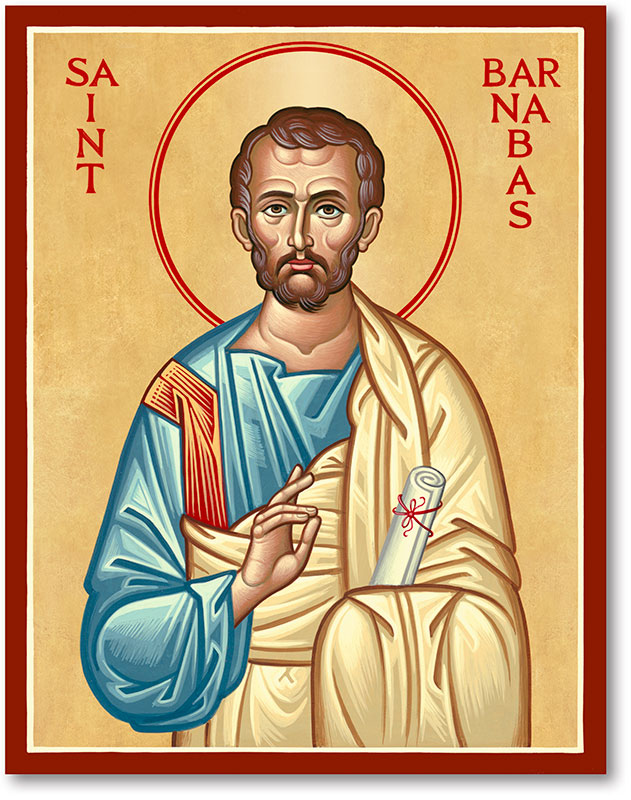
| Feast Day | June 11 |
|---|---|
| Patronage |
|
| Place of Birth | Cyprus (likely in the city of Salamis) |
| Place of Death | Salamis, Cyprus |
| Canonization Date | N/A |
Biography
St. Barnabas, originally named Joseph, was a Levite from Cyprus who became one of the early followers of Jesus Christ. His name, “Barnabas,” means “Son of Encouragement” in Aramaic, reflecting his role as an encourager and advocate for the early Christian community. He is mentioned in the Acts of the Apostles as a prominent early Christian leader and a companion of St. Paul on his missionary journeys.
Barnabas played a critical role in welcoming Paul (formerly Saul) into the Christian community, vouching for him when others were afraid to accept Paul due to his past persecution of Christians. Barnabas and Paul traveled extensively throughout the Mediterranean world, spreading the Gospel and establishing Christian communities in places like Antioch, Asia Minor, and Greece. Barnabas is also credited with founding the Christian community in Antioch, which later became one of the most important centers of early Christianity.
Barnabas is believed to have been martyred in Salamis, Cyprus, where he was stoned to death by the Jews who opposed his teachings. Tradition holds that his remains were later found by St. Epiphanius of Salamis, who discovered his relics in the 4th century.
Miracles & Important Events
- Healing the Sick: In the Acts of the Apostles (Acts 14:8-10), Barnabas, along with Paul, healed a man who was crippled from birth, which resulted in many people in Lystra believing in the Gospel.
- Missionary Journeys with Paul: Barnabas was a key figure in the early missionary work of the Church, particularly in the spread of Christianity to the Gentiles. His partnership with Paul helped lay the foundation for the expansion of Christianity beyond Jewish communities.
- The Council of Jerusalem: Barnabas participated in the Council of Jerusalem (Acts 15), where the apostles and elders debated whether Gentile converts to Christianity needed to follow Jewish customs, such as circumcision. Barnabas supported the position that Gentiles should not be burdened by such laws.
Associated Symbols
- A Bible or scroll (representing his role in preaching the Gospel)
- A staff (often depicted in iconography as a symbol of his role as a leader)
- A man with a stoning (symbolizing his martyrdom)
- A dove (signifying peace and the Holy Spirit)
Quotes & Writings
- St. Barnabas is traditionally believed to be the author of the Epistle of Barnabas, though scholars debate its authorship. The letter is a significant early Christian text, written to explain the relationship between the Old and New Testaments and to encourage Christians to live holy lives. It is not part of the New Testament but was considered authoritative by some early Christians.
- From Acts 11:24, Barnabas is described as “a good man, full of the Holy Spirit and of faith, and a great many people were added to the Lord.”
- Acts 4:36-37 provides insight into his character: “Thus Joseph, who was also called by the apostles Barnabas (which means ‘son of encouragement’), a Levite, a native of Cyprus, sold a field that belonged to him, then brought the money and laid it at the apostles’ feet.”