St. Mary Magdalene
| Feast Day | July 22 |
|---|---|
| Patronage |
|
| Place of Birth | Magdala |
| Place of Death | N/A |
| Canonization Date | N/A |
Biography
St. Mary Magdalene is one of the most prominent female figures in the New Testament and is often referred to as the “Apostle to the Apostles” because she was the first person to witness the Resurrection of Jesus. She is sometimes misunderstood due to her association with the figure of the “sinful woman” who anointed Jesus’ feet in Luke 7, but there is no definitive scriptural evidence that Mary Magdalene was a prostitute, despite this traditional association.
Mary Magdalene is introduced in the Gospels as a woman whom Jesus healed of seven demons (Luke 8:2). Following her healing, she became one of Jesus’ most devoted followers, accompanying Him during His ministry and providing financial and spiritual support.
Mary Magdalene is particularly important in the Gospels for her presence at critical events in the life of Jesus:
- Witnessing the Crucifixion: She was present at the crucifixion, standing with Mary, the mother of Jesus, and other women at the foot of the cross.
- Witness to the Burial: She saw Jesus being laid in the tomb and was among those who went to the tomb on the third day after His death.
- First to Witness the Resurrection: In the Gospel of John (20:11-18), Mary Magdalene is the first to encounter the risen Christ. Jesus appeared to her outside the tomb and instructed her to go and tell the apostles about His resurrection, making her the first to announce the news.
Because of her witness to the Resurrection, St. Mary Magdalene holds a unique and revered place in Christian tradition, being seen as a model of faith, repentance, and devotion. In art and literature, she is often depicted as a woman of deep contemplation and prayer, reflecting her close relationship with Jesus.
Miracles & Important Events
- Healing of Seven Demons: The Gospel of Luke (8:2) mentions that Mary Magdalene was healed by Jesus of seven demons, which marked the beginning of her transformation from a troubled woman to a faithful disciple.
- Witnessing the Resurrection: The most important event in Mary Magdalene’s life was her witnessing the Resurrection of Jesus. She was the first to see Him alive after His death and is often referred to as the “Apostle to the Apostles” because she was the one to announce the Resurrection to the other disciples.
- Preaching of the Gospel: According to some traditions, after the death of Jesus, Mary Magdalene went to various places, including Ephesus and France, to spread the Gospel, though historical evidence for these travels is scarce.
Associated Symbols
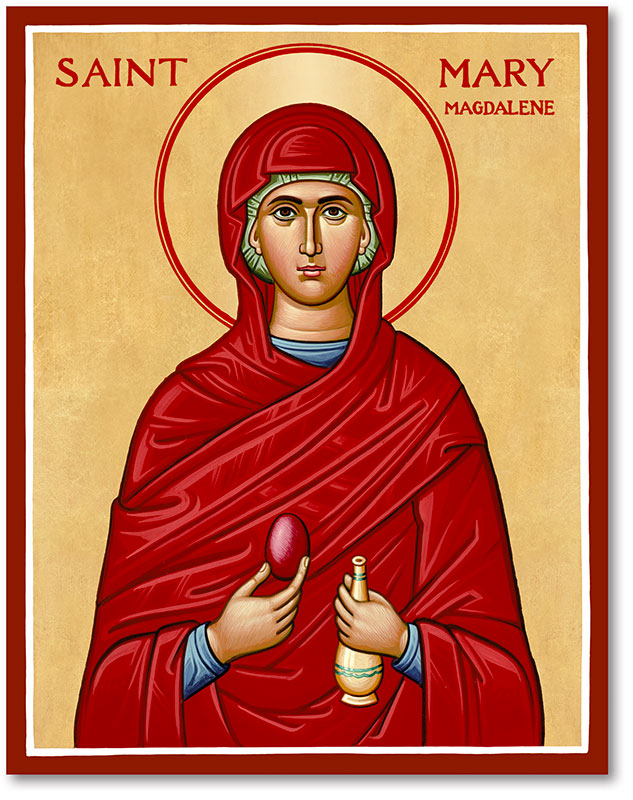
- Jar of Perfume (symbolizing the anointing of Jesus’ feet, representing her love and devotion).
- Skull (sometimes shown in art as part of the symbolism of contemplation, repentance, and remembrance of death).
- Long Hair (often depicted with long hair, as she wiped Jesus’ feet with it).
- Cross or Empty Tomb (symbolizing her role in the Resurrection story).
- Mirror (representing self-reflection and repentance).