St. Agnes
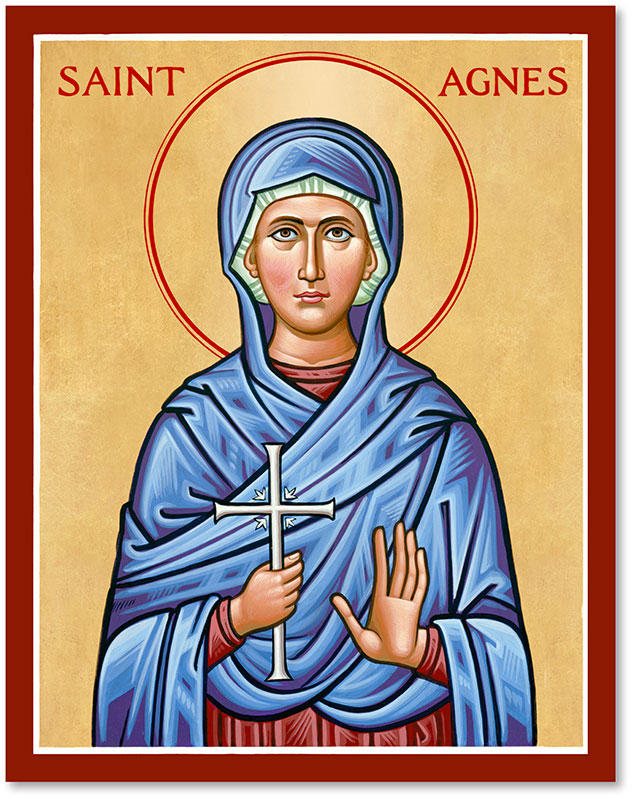
| Feast Day | January 21 |
|---|---|
| Patronage |
|
| Place of Birth | Rome, Italy |
| Place of Death | Rome, Italy |
| Canonization Date | N/A |
Biography
St. Agnes was a young Christian martyr, known for her purity, beauty, and unwavering faith. She was born into a noble Roman family, and from an early age, she dedicated herself to God, vowing to remain a virgin. When she reached adolescence, her beauty attracted the attention of several suitors. However, she rejected them, preferring to remain faithful to Christ.
One of the suitors, infuriated by her refusal, reported her to the Roman authorities for being a Christian. As a result, St. Agnes was arrested and sentenced to death. Despite her youth, she remained steadfast in her faith. According to legend, she was first condemned to a life of prostitution, but when a soldier attempted to violate her, he was struck blind, and Agnes remained unharmed. Eventually, she was beheaded for refusing to renounce her Christian faith.
St. Agnes is considered one of the most revered virgin martyrs in the Christian tradition, and her faith and purity have made her a symbol of chastity and commitment to God. Her feast day is celebrated with great devotion, particularly by young girls and those seeking purity.
Miracles & Important Events
- Conversion of the Soldier: One of the most famous miracles attributed to St. Agnes is the healing of a soldier who tried to violate her and was struck blind. He was later healed after asking for her intercession.
- Preservation of Purity: After her death, it was said that her body remained incorrupt and pure, which became a sign of her holiness.
- The Lamb Miracle: It is said that a lamb, which was to be sacrificed, was sent to St. Agnes by God. She chose to live a life of purity and to remain untouched, even by her suitors.
Associated Symbols
- Lamb: St. Agnes is often depicted holding a lamb, which represents her purity and innocence. The lamb is also a symbol of Jesus Christ, “the Lamb of God.”
- Palm Branch: A symbol of martyrdom, as she is often shown holding a palm branch, which was a common symbol for martyrs.
- A Sheaf of Wheat: In some depictions, a sheaf of wheat is included, symbolizing the bread of life and her purity.
- Beheading Sword: A symbol of her martyrdom, representing the manner of her death.
- Flames or Fire: Representing her purification through martyrdom, some images depict St. Agnes with flames around her.