St. Cecilia
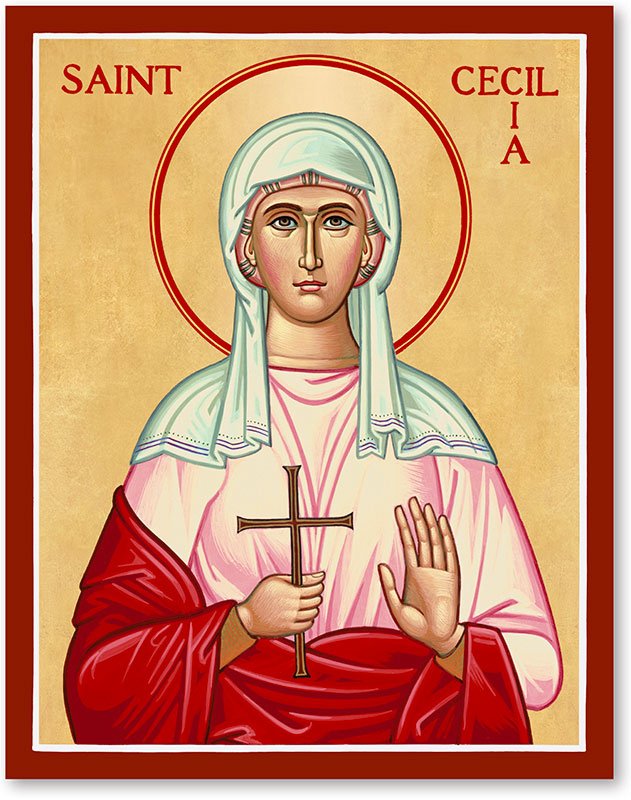
| Feast Day | November 22 |
|---|---|
| Patronage |
|
| Place of Birth | Rome, Italy |
| Place of Death | Rome, Italy |
| Canonization Date | N/A |
Biography
St. Cecilia is one of the most well-known martyr saints in the Catholic tradition. She was a noblewoman from Rome and is believed to have lived during the late 2nd century and early 3rd century under the Roman Empire. She was raised in a Christian family, and from a young age, she vowed to remain virginal and dedicate her life to God.
According to tradition, Cecilia was married to a Roman nobleman named Valerian, but she remained steadfast in her commitment to celibacy. On their wedding night, Cecilia reportedly told her husband that an angel of God watched over her and protected her virginity. Valerian, intrigued and moved by her words, sought out the Pope and was baptized, along with his brother, Tiburtius.
Cecilia’s commitment to her faith was tested when she continued to preach the gospel to others, even as Christians were being persecuted by the Roman Empire. Her actions eventually led to her martyrdom. She was arrested and condemned to die for refusing to renounce her Christian faith.
She was sentenced to be suffocated in a hot bath, but according to tradition, she survived for three days before finally dying from injuries inflicted during her martyrdom. During those three days, she continued to preach and convert others to Christianity. After her death, her body was buried in the Catacombs of St. Callixtus in Rome.
Miracles & Important Events
- Conversion of Valerian and Tiburtius: St. Cecilia is said to have converted her husband, Valerian, and his brother, Tiburtius, to Christianity, leading them to become martyrs themselves.
- Her Martyrdom: Cecilia’s martyrdom is one of the key events in her story. She was sentenced to death by suffocation in a hot bath, but her survival for three days allowed her to continue preaching and converting others to Christianity. This is one of the reasons why she is revered for her steadfastness in her faith.
- Burial and Relics: After her death, her body was found to be incorrupt when it was exhumed during the reign of Pope Paschal I in the 9th century, and her remains were moved to the Church of St. Cecilia in Rome.
Associated Symbols
- Musical instruments (especially organ, violin, or cymbals)
- A palm branch (symbolizing her martyrdom)
- A crown of flowers (sometimes shown to represent her heavenly glory)
- A book or scroll (indicating her dedication to the Word of God and her role as a preacher)
Quotes & Writings
- “May my heart be as pure as the voice of the organ that I play in praise of God.”
- “Sing, my heart, sing for the Lord!”